Sep 2, 2026
Small Modular Reactor Turbine Design: Why SMRs Can’t Simply Reuse Utility-Scale Turbomachinery
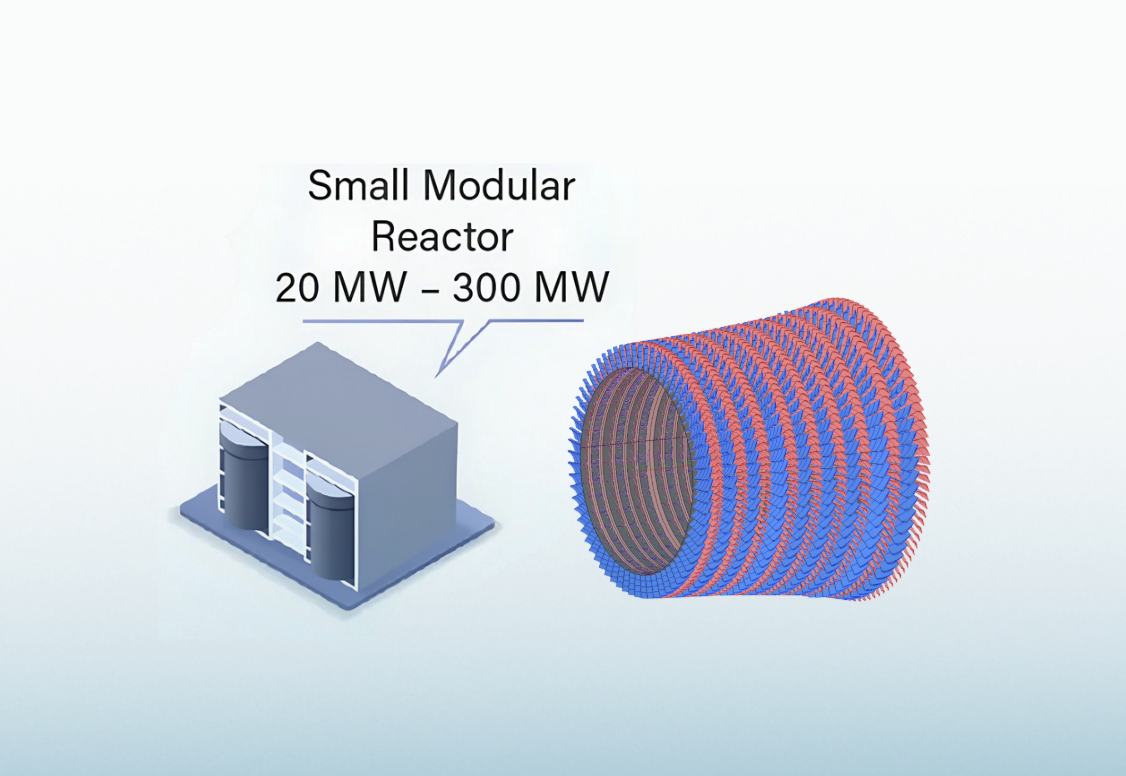
Small Modular Reactors (SMRs) are reshaping the future of nuclear power by promising greater deployment flexibility, lower upfront capital costs, and improved scalability. However, while much of the discussion around SMRs focuses on reactor technology, an equally important challenge lies downstream with the power conversion system. A common assumption is that the turbine technology used in large conventional nuclear plants can simply be scaled down to match a smaller reactor output. In reality, turbomachinery design for SMRs presents a unique set of aerodynamic, thermal, mechanical, and economic challenges that require a fundamentally different approach.
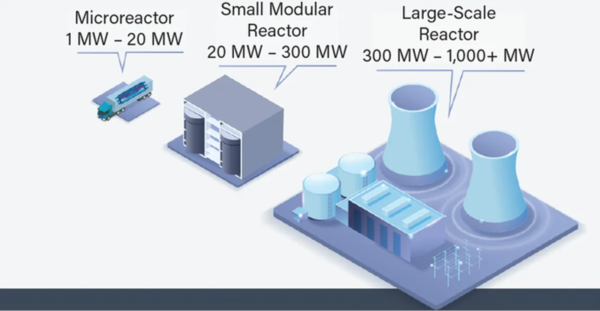
Figure 1. Comparison between a conventional, small modular reactor, and microreactor in terms of their sizes and generated power [1]
The Scaling Challenge for Small Modular Reactors
Traditional utility-scale nuclear steam turbines have evolved over decades to efficiently convert hundreds or even thousands of megawatts of thermal power into electricity. Their size enables highly optimized flow paths, relatively favorable blade aspect ratios, and low losses across multiple turbine stages.
However, when power output is reduced by an order of magnitude or more, these same design principles do not scale linearly. Turbine efficiency is heavily influenced by geometric parameters such as blade height, tip clearance, and flow passage dimensions. As turbines become smaller, losses that were once negligible begin to represent a much larger fraction of the overall energy conversion process.
For example, leakage losses through blade tip clearances remain significant even as blade heights decrease. In a smaller machine, the relative impact of these losses can increase substantially, reducing stage efficiency and overall cycle performance. Similarly, secondary flow effects, boundary layer growth, and endwall losses become more dominant as characteristic flow dimensions shrink.
The result is a challenging reality: merely downsizing a utility-scale turbine design often fails to deliver the efficiency levels required for economically competitive small modular reactor operation.
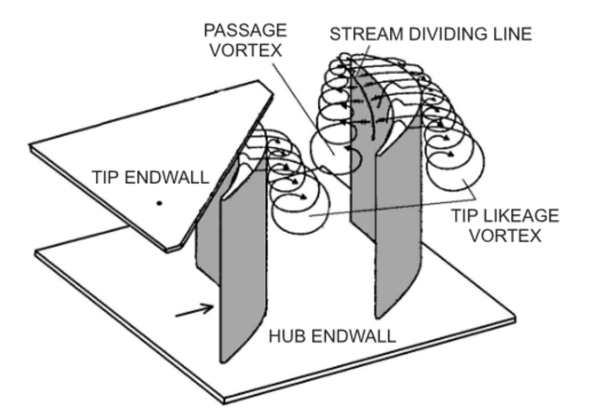
Figure 2. Tip leakage vortex and passage vortex at the tip endwall [2]
Aerodynamic Considerations Become More Critical
Aerodynamics play a central role in SMR turbine design. Smaller flow paths generally mean lower Reynolds numbers, which can increase viscous losses and alter blade performance characteristics. The velocity triangles and stage loading strategies that work well in large nuclear turbines may no longer represent the optimal solution at SMR scales.
Designers must carefully reconsider factors such as:
• Number of stages
• Degree of reaction
• Rotational speed
• Blade loading
• Flow path architecture
• Moisture management strategies
In many cases, higher rotational speeds may help offset some of the aerodynamic penalties associated with the smaller turbine size. However, increasing rotational speed introduces new mechanical and rotor dynamic considerations that must be addressed simultaneously.
This creates a highly coupled optimization problem where aerodynamic, structural, and economic objectives must be balanced from the earliest stages of development.
Thermal and Cycle Integration Challenges
There are also many small modular reactor concepts that differ significantly from conventional large nuclear power plants in the way heat is produced and transferred. Depending on the reactor technology, the power conversion system may utilize steam, supercritical CO₂, helium, or other working fluids.
These alternative cycles often require entirely different turbomachinery architectures compared to traditional steam turbines. Even among steam-based SMRs, reactor outlet conditions, steam quality, and load-following requirements may differ substantially from those of existing utility-scale plants.
As a result, turbine design cannot be treated as an isolated component. Instead, it must be optimized as part of an integrated thermodynamic cycle. Small changes in turbine efficiency can have a disproportionately large impact on plant economics, making system-level optimization increasingly important.
Economics Drive Design Decisions
Efficiency is only one piece of the small modular reactor equation.
One of the primary goals of SMRs is reducing capital costs through modular manufacturing and factory-based production. Turbomachinery must support these objectives rather than undermine them.
A direct scale-down of conventional designs may result in:
• Excessive stage counts
• Difficult manufacturing requirements
• Higher maintenance costs
• Reduced reliability
• Poor economic performance
Therefore, designers often face tradeoffs between maximum efficiency and practical manufacturability. In some cases, a slightly lower efficiency design may provide a significantly lower lifecycle cost and better overall project economics.
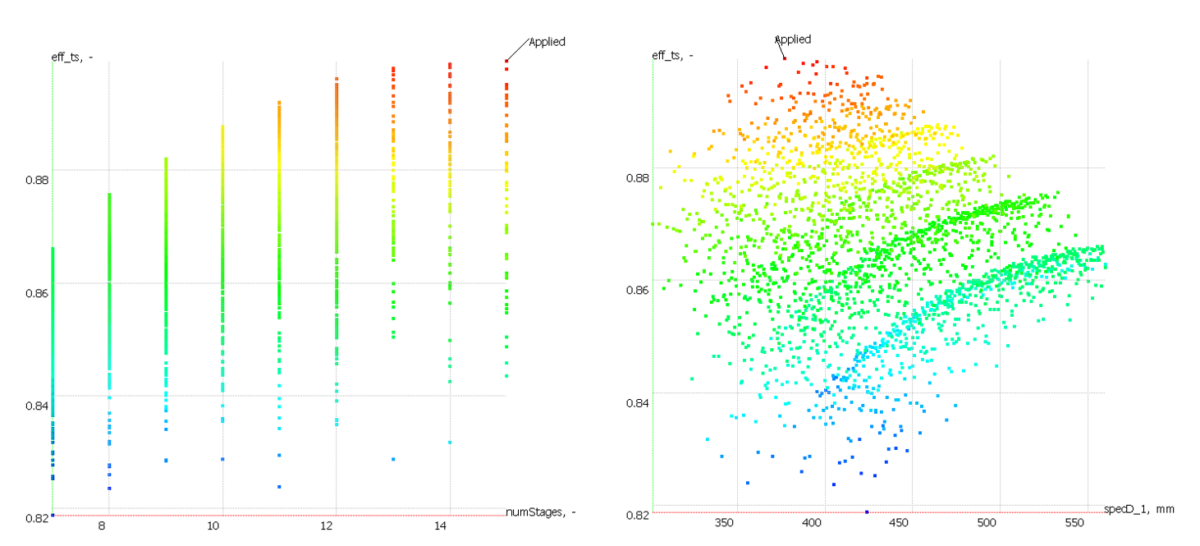
Figure 3. Trade study example; Left: Efficiency vs. number of stages; Right: Efficiency vs. machine hub diameter in AxSTREAM
This reality is driving renewed interest in innovative turbine configurations, advanced materials, additive manufacturing techniques, and integrated optimization methodologies tailored specifically for SMR applications.
Why a New Design Philosophy Is Needed
The transition from conventional nuclear plants to SMRs represents far more than a reduction in power output. It requires a shift in turbomachinery design philosophy.
Successful small modular reactor turbines must be:
• Aerodynamically optimized for smaller scales
• Mechanically robust at potentially higher rotational speeds
• Integrated with advanced reactor and cycle architectures
• Economically viable for modular deployment
• Flexible enough to accommodate evolving SMR technologies
Meeting these requirements demands a multidisciplinary design approach that evaluates the entire energy conversion system rather than focusing on individual components in isolation.
Accelerating SMR Turbine Development with AxSTREAM
As small modular reactor developers seek to bring new reactor concepts to market, modern design tools are becoming essential for navigating the complexity of turbomachinery optimization.
SoftInWay’s AxSTREAM platform enables engineers to perform integrated design, analysis, and optimization of turbines and complete thermal cycles within a unified environment. Rather than relying on simplified scaling laws or adapting legacy utility-scale designs, engineers can evaluate multiple turbine architectures, perform cycle-level trade studies, and optimize performance across aerodynamic, mechanical, and economic objectives simultaneously.
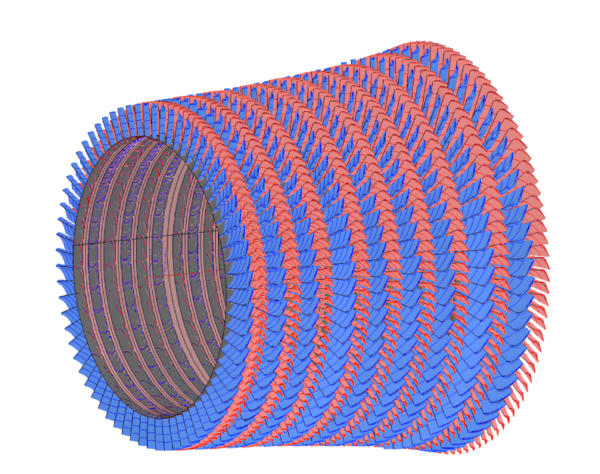
Figure 4. Axial turbine example in AxSTREAM
From conceptual cycle development through meanline design, 3D flow-path optimization, structural analysis, and performance evaluation, AxSTREAM helps engineering teams identify solutions specifically tailored to the unique demands of SMR applications.
Looking Ahead
As small modular reactors move closer to commercial deployment, turbomachinery will play a critical role in determining overall plant performance and economic viability. The industry is increasingly recognizing that simply shrinking existing utility-scale turbine designs is not enough. The aerodynamic, thermal, and economic realities of SMRs require purpose-built solutions designed from the ground up.
By embracing integrated optimization and advanced turbomachinery design methodologies, and software like AxSTREAM, developers can unlock the full potential of small modular reactors and create power conversion systems capable of delivering the efficiency, reliability, and cost competitiveness needed for the next generation of nuclear energy.
References
- Wong, W. (2023, November 29). Going nuclear: A guide to SMRs and nuclear-powered data centers. Data Center Knowledge. https://www.datacenterknowledge.com/energy-power-supply/going-nuclear-a-guide-to-smrs-and-nuclear-powered-data-centers
-
Lampart, P. (2006). Tip leakage flows in turbines. TASK Quarterly, 10(2), 139–162. https://www.researchgate.net/publication/228643539_Tip_leakage_flows_in_turbines
"*" indicates required fields