Jan 22, 2014
At a Glance – Turbochargers

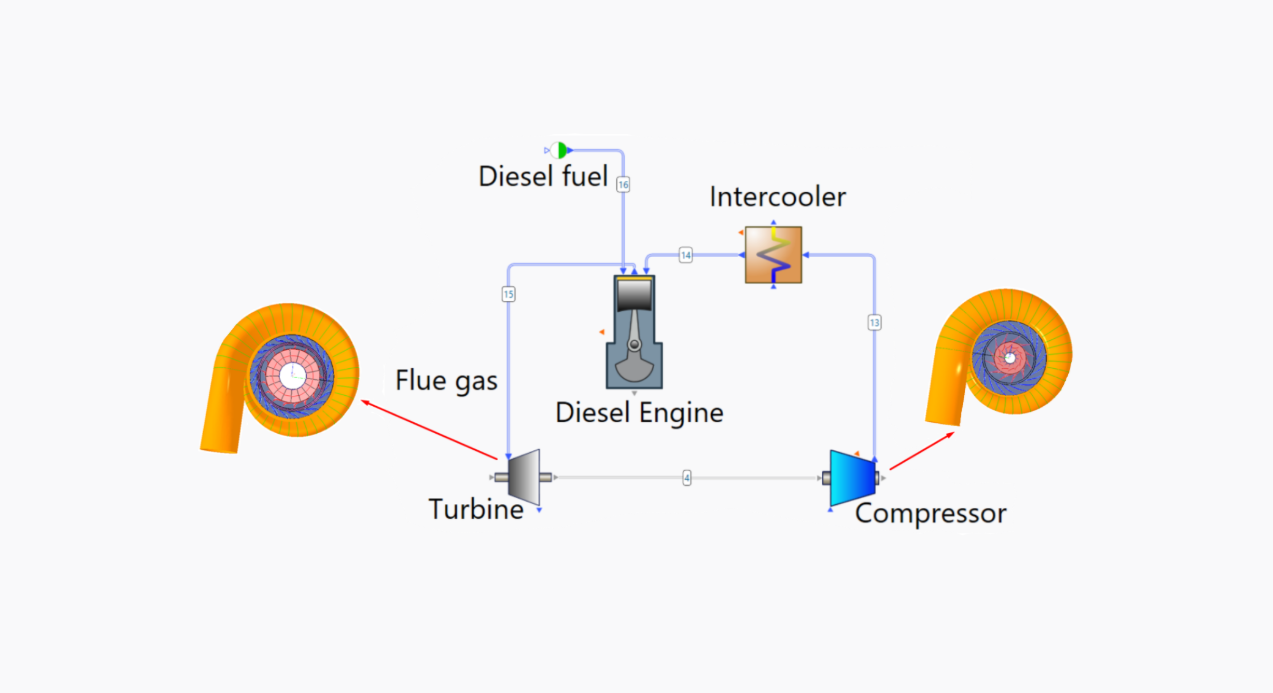
Turbocharger System Example
With the ongoing movement toward global environmental protection, regulations related to the exhaust emissions and fuel consumption of automobiles are being strengthened. To cope with these requirements, turbochargers are an effective tool to improve fuel consumption and reduce carbon dioxide emissions, by reducing the engine weight and friction loss.
How Turbochargers Improve Engine Efficiency
Since a turbocharger supplies compressed air to an engine, it can reduce the engine displacement relative to an atmospheric engine for the same power. Variable geometry turbochargers, which can control the boost pressure according to the engine operating conditions, are becoming increasingly popular, creating a demand for a centrifugal compressor with a wide and stable operational range.
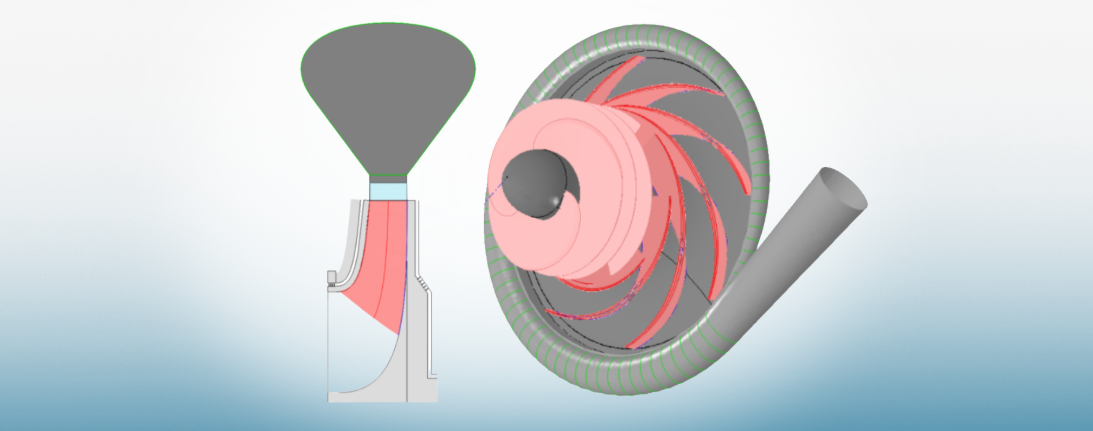
A turbocharger consists of a compressor wheel and an exhaust gas turbine wheel coupled together by a solid shaft. It is used to boost the air intake pressure of an internal combustion engine. The gas turbine extracts energy from the exhaust gas and uses it to drive the compressor and overcome friction.
Of course there are some advantages and disadvantages to turbocharger systems.
Advantages & Disadvantages of Turbocharger Systems
Advantages:
•Otherwise wasted exhaust gas energy can be used to drive the compressor (see previous post)
•More specific power over a naturally-aspirated (NA) engine — it means an engine can produce more power for its size
•Reuse of excess exhaust heat (it gets channeled into the turbocharger to increase the boost of the engine) which means the engine runs more efficiently
•A turbocharger is smaller, lighter and easier to fit than a supercharger (perfect for narrow installation conditions)
•Because a small engine can be made to produce the power of a bigger engine, fuel economy is often better on a per kW basis (smaller specific fuel consumption)
•High torques for wide speed ranges
"*" indicates required fields