Jul 1, 2026
Aerodynamic Cross-Coupling in Rotor Dynamics: Why It Matters for Stability
In high-speed turbomachinery, rotor stability is influenced not only by mechanical design but by aerodynamic forces generated within the machine. While stiffness and damping from bearings are commonly evaluated, additional destabilizing effects can originate from aerodynamic interactions within compressors and turbines.
One of the most important effects is aerodynamic cross-coupling stiffness. This phenomenon can alter rotor dynamic behavior and, in some cases, contribute to instability even when the mechanical system appears stable under conventional assumptions.
In this blog, we will explore what aerodynamic cross-coupling is, where it can originate, why it matters for rotor stability, and how modern tools such as AxSTREAM RotorDynamics and Bearing enable engineers to evaluate it more effectively.
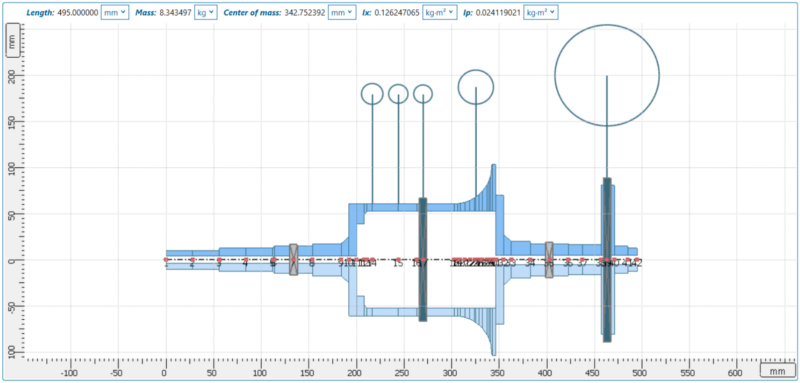
Figure 1. The rotor-bearing model with aerodynamic cross-coupling stiffnesses applied at the blade-row locations in AxSTREAM RotorDynamics and Bearing
What Is Aerodynamic Cross-Coupling?
Aerodynamic cross-coupling occurs when forces from the surrounding flow field act in the direction not aligned with the rotor displacement. Instead of producing only a direct restoring force opposite to the displacement, the aerodynamic forces can also generate a perpendicular force component.
In a simplified sense:
- A displacement in the X direction can produce a force component in the Y direction (Kxy)
- A displacement in the Y direction can produce a force component in the X direction (Kyx)
This cross-coupled force component can create a rotating force field around the shaft. Depending on its direction and magnitude, it may reinforce rotor whirl motion rather than oppose it, increasing vibration amplitudes and reducing the stability margin of the rotor-bearing system.
Unlike direct stiffness, which is usually associated with restoring behavior, cross-coupled stiffness can act in a destabilizing direction by adding energy to the rotor vibration rather than dissipating it. For this reason, it is an important input in stability evaluations of high-speed turbomachinery.
Sources of Aerodynamic Cross-Coupling
Aerodynamic cross-coupling originates from forces that develop when the rotor is displaced from its centered position. In turbomachinery, these forces are commonly associated with blade rows, including centrifugal compressors and axial flow machines, where pressure and velocity distributions around the rotor can become circumferentially nonuniform.
In centrifugal compressors, aerodynamic cross-coupling can occur due to asymmetric pressure forces acting on the impeller. When the rotor centerline is displaced, the surrounding flow field can generate a tangential force component that acts perpendicular to the displacement direction. This force can contribute to forward whirl excitation and influence the stability of the rotor-bearing system.
In axial flow machines, similar effects can develop within blade rows. When the rotor is displaced from its centered position, the resulting change in blade-tip clearances and flow distribution can produce circumferential pressure variations. These pressure variations can generate cross-coupled stiffness forces, which can feed energy into forward whirl motion and reduce rotor stability. The effect becomes especially significant in highly loaded stages, where aerodynamic forces may be substantial compared to the stabilizing damping provided by the rotor-bearing system.
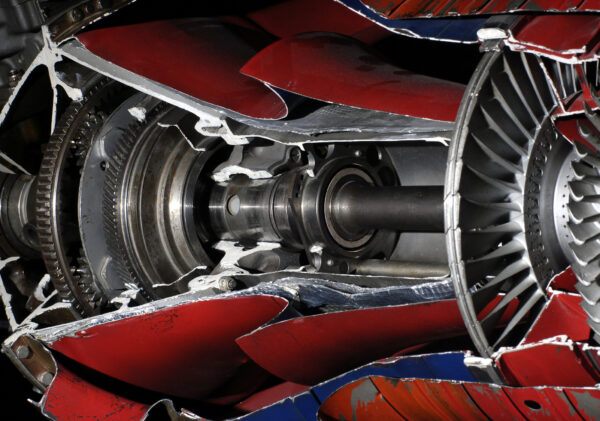
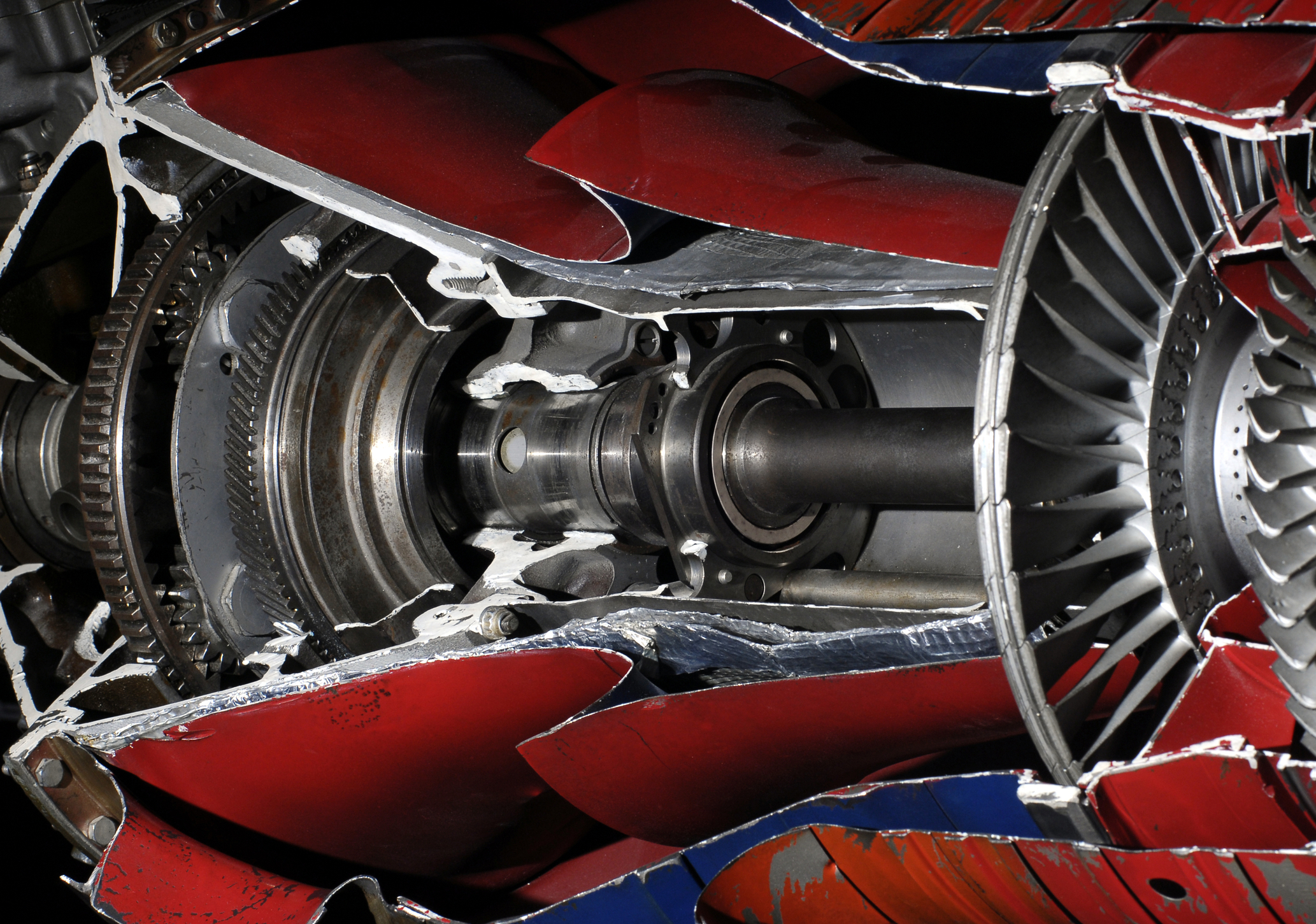
Figure 2. Aircraft rotor cross section
Since these mechanisms depend on machine type, geometry, aerodynamic loading, and operating conditions, the resulting cross-coupling coefficients are often speed-dependent and should be evaluated as part of the overall rotor dynamic stability assessment.
Influence on Rotor Dynamic Stability
The main concern with aerodynamic cross-coupling is its influence on rotor stability. In a stable rotor system, damping dissipates vibrational energy and helps suppress rotor motion. Cross-coupled stiffness can have the opposite effect by introducing forces that reinforce the whirling motion of the rotor.
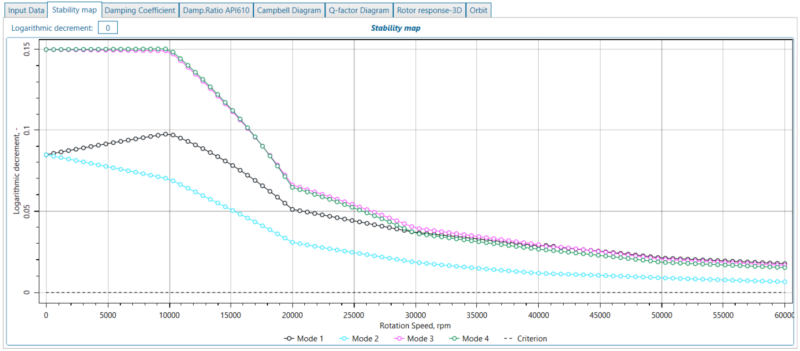
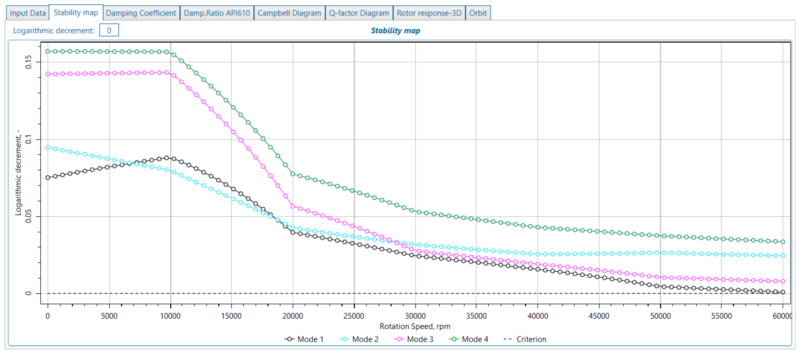
Figure 3. Logarithmic decrement calculated for a gas turbine without cross-coupling stiffness coefficients (top) and with cross-coupling stiffness coefficients included (bottom)
If the destabilizing aerodynamic forces are small compared with the available damping, their effect may be limited. However, as machine speed, pressure ratio, or aerodynamic loading increases, cross-coupling can become significant enough to reduce the logarithmic decrement, lower the stability margin, or contribute to self-excited vibration.
For this reason, stability analysis based on bearing dynamic coefficients alone may not always provide a complete picture. A rotor-bearing system that appears stable without aerodynamic cross-coupling may show reduced stability once these additional forces are included. This is especially important for high-speed compressors and axial machines, where aerodynamic forces can strongly influence dynamic behavior.
Including cross-coupling stiffness in the rotor dynamic model helps engineers evaluate whether the available damping is sufficient for the expected operating conditions and whether design modifications may be required to improve stability.
Evaluating Cross-Coupling with AxSTREAM RotorDynamics and Bearing
Modern simulation tools allow aerodynamic cross-coupling to be included directly in rotor dynamic stability evaluations. In AxSTREAM RotorDynamics and Bearing, users can calculate speed-dependent coefficients using methods intended for centrifugal compressors and axial flow rotors.
For blade-machine applications, the required turbomachinery parameters can be imported from AxSTREAM Flow Path, allowing aerodynamic and geometric data to be efficiently transferred into the rotor dynamic model. This helps reduce manual input and improves consistency between the aerodynamic design and the rotor dynamic stability assessment.
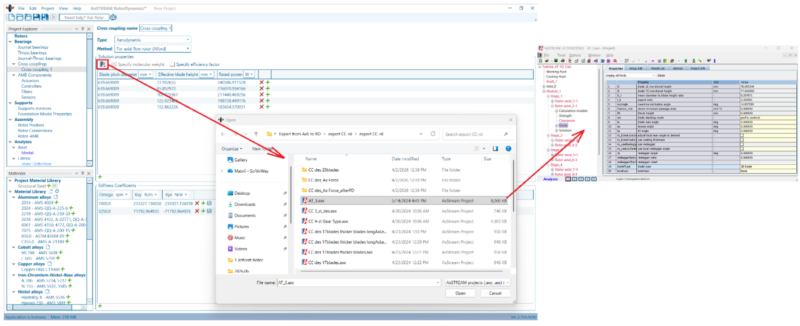
Figure 3. Import of turbomachinery parameters from AxSTREAM Flow Path for cross-coupling stiffness calculation in AxSTREAM RotorDynamics
By using these capabilities, engineers can evaluate aerodynamic cross-coupling using aerodynamic and geometric data already available from the turbomachinery design workflow, rather than treating the coefficients as isolated manual inputs. This supports a more consistent assessment of how blade-row aerodynamic forces affect rotor stability across the operating speed range.
A Modern Approach to Rotor Stability Assessment
Aerodynamic cross-coupling is an important factor in rotor dynamic stability, particularly for high-speed turbomachinery with highly loaded blade rows. These effects can reinforce rotor whirl motion and should be considered when evaluating stability margins across the operating speed range.
Accurately capturing these effects helps engineers move beyond simplified stability assumptions and better understand how aerodynamic forces influence rotor behavior.
With tools such as AxSTREAM RotorDynamics and Bearing, engineers can calculate, define, and incorporate cross-coupling stiffness coefficients into stability evaluations more efficiently. This supports more realistic rotor dynamic predictions, better-informed design decisions, and improved confidence in the stability of high-speed rotating machinery.
References
American Petroleum Institute, API Standard Paragraphs Rotordynamic Tutorial: Lateral Critical Speeds, Unbalance Response, Stability, Train Torsionals, and Rotor Balancing. Washington, D.C.: API Publishing Services, 2005.
J.S. Alford, “Protecting Turbomachinery From Self-Excited Rotor Whirl,” J. Eng. Power, vol. 87, no. 4, pp. 333–343, 1965, doi: 10.1115/1.3678270.
J.C. Wachel and W.W. von Nimitz, “Ensuring the Reliability of Offshore Gas Compression Systems.,” JPT, J. Pet. Technol., vol. 33, no. 11, pp. 2252–2260, 1981, doi: 10.2118/10591-PA.
"*" indicates required fields