

Avoiding Torsional Vibration Problems and Failures in Reciprocating Machines
Reciprocating machines gained popularity due to their casual usage in civil automotive, aircraft, railroad, marine, gas compression, and power generation applications. That said, the unique design of reciprocating machine crankshafts and the periodic loading of harmonic gas forces and inertia loads make the torsional vibrations of reciprocating machine power trains especially dangerous and challenging. To avoid torsional vibration problems and potential failures in reciprocating machines, corresponding rotor dynamics simulations must be performed during the design stage. This however is made difficult due to a lack of information on practical aspects and strategies used to perform rotor dynamics simulations of these machines. In summary, rotor dynamics simulations of reciprocating machines are no easy task and require advanced strategies and functionalities to complete.
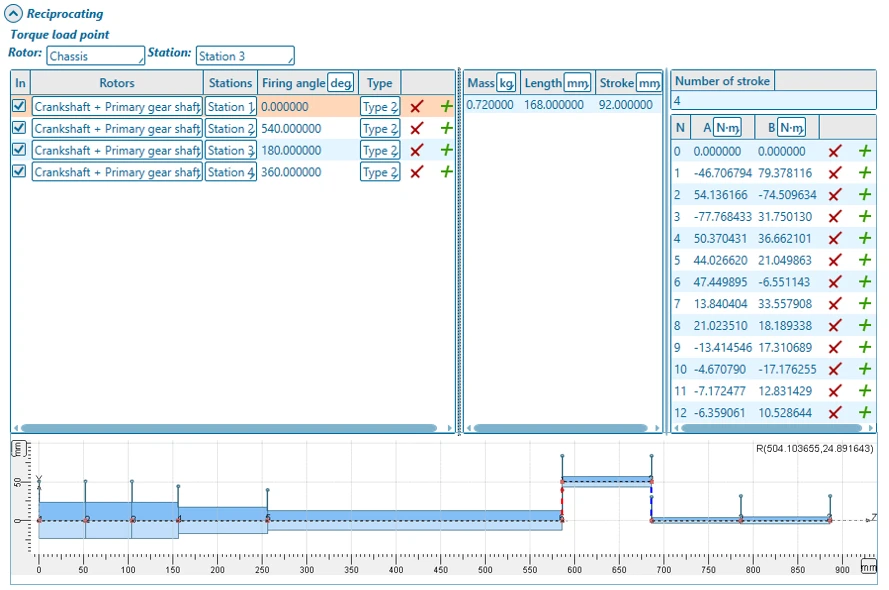
In this webinar, we will present strategies to avoid torsional vibration problems in reciprocating machines at the design stage. We’ll discuss troubleshooting techniques and key challenges when performing rotor dynamics calculations on reciprocating machines such as the complicated harmonic nature of gas and inertial loads and how they influence the machine’s torsional rotor vibrations. Steps to perform torsional vibration modeling of reciprocating machine crankshafts will be covered in detail. The webinar will conclude with a real example of how to calculate torsional harmonic analysis of a four-stroke four-cylinder car engine power train using the AxSTREAM RotorDynamics module (powered by algorithms specially designed for this kind of calculation). By the end of this webinar, attendees will have a well-rounded understanding of how to implement modern techniques to ensure the safe and reliable operation of reciprocating machine rotors using AxSTREAM RotorDynamics.
This webinar session will include:
- Discussion of common problems in reciprocating machines such as damages to crankshafts, failures of couplings, high torsional oscillations, resonances, elevated levels of torsional torques and stresses, and fatigue failures of rotating components.
- Methods to uncover these problems for both new designs and in manufactured machines.
- Design considerations and requirements of reciprocating machines
- Discussion of reciprocating machine torsional vibration algorithms, procedures and analyses (torsional modal, harmonic, transient), as well as strategies to detect and solve torsional vibration issues such as detuning torsional resonances, adding damping to the system, isolation excitation between components, and more.
- Case study and live software demonstration of rotor dynamics analysis in a four-stroke four-cylinder car engine power train with a crankshaft using AxSTREAM RotorDynamics.
Who should attend?
- Reciprocating machinery equipment engineers and designers who are interested in exploring new software for modeling torsional vibrations of reciprocating machine power trains.
- Engineering Managers and Consultants interested in specialized procedures for analyzing and solving challenges related to torsional rotor dynamics of reciprocating machine crankshafts.
- Engineering students interested in expanding their theoretical and practical knowledge within the scope of rotor dynamics.
Simulating Advanced Data Center Cooling Systems with AxSTREAM
View Details
Holistic Turbofan Design & Optimization with AxSTREAM
View Details
Solving Simulation Challenges in Advanced Propulsion Systems
View Details