Jul 31, 2026
Decarbonizing Maritime Shipping with Turbomachinery
Cleaner marine propulsion and maritime shipping won’t come from a single fuel or machine. It will come from tightly integrated systems in which compressors, turbines, generators, motors, heat exchangers and controls all work together to extract more useful work from every unit of energy. The challenge is that none of these technologies can be optimized independently. Every improvement changes the performance, efficiency, or operating requirements of the rest of the vessel.
This is the engineering shift happening, moving from optimizing individual machines to optimizing the ship as a whole energy system. In this blog, we’ll dive into the four levers of this system: turbocharging, waste-heat recovery, electrification, and alternative fuels and how AxSTREAM helps engineers integrate them into one complete system.
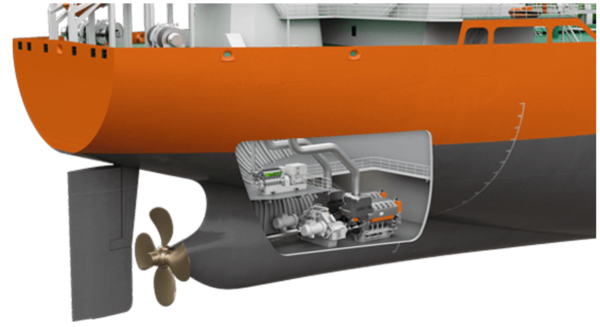
Figure 1. integrated low-carbon marine powertrain. SOURCE: [6]
The Industrial Shift and Why Turbomachinery Matters
International shipping is moving toward net-zero greenhouse-gas (GHG) emissions by or around 2050. The International Maritime Organization also calls for carbon intensity to fall at least 40% by 2030 and for zero- or near-zero-emission energy sources to supply at least 5%, striving for 10%, of shipping energy by that year [1]. These goals place the engine room at the center of the transition.
Turbomachinery already controls the movement and conversion of air, exhaust gas, steam, fuel and electrical power on board. Improving those machines, and the way they interact, can lower fuel demand now while preparing vessels for new fuels later. That interaction begins with the turbochargers, the first of four engineering levers that shape overall vessel efficiency.
Turbocharging: Cleaner Combustion through Advanced Air Systems
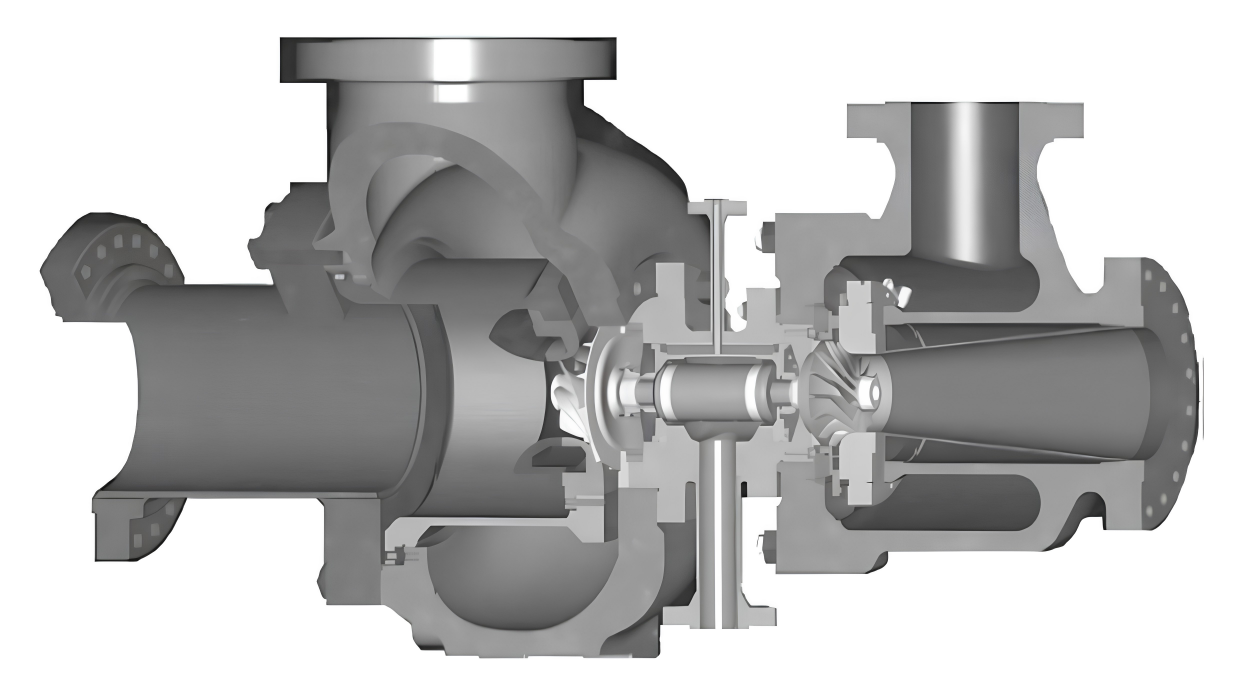
A turbocharger uses exhaust energy to compress the intake air supplied to an engine. Higher air density supports efficient combustion and allows a smaller engine to deliver a given power output. But the next step isn’t just a larger pressure ratio. Marine systems demand wide operating maps, rapid transient response, high efficiency at part load and control strategies that prevent surge when propeller demand changes suddenly. That’s where variable turbine geometry, staged turbocharging, electrically assisted turbochargers and smarter bypass control come in. Together, they can help keep the engine near an efficient operating point across slow steaming, maneuvering and rough-weather conditions.
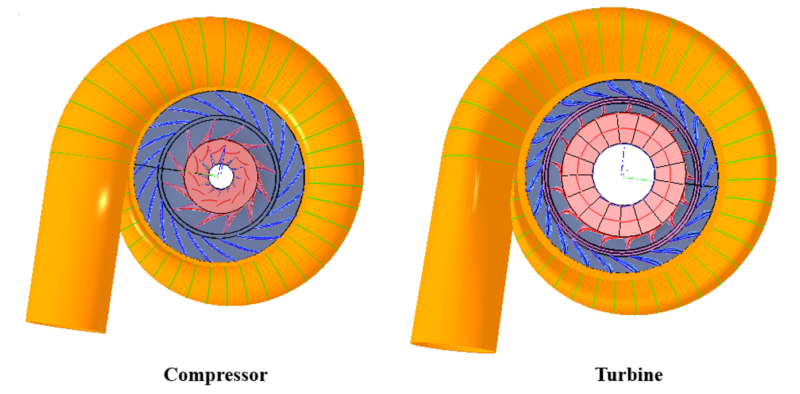
Figure 2. Centrifugal Compressor and Radial Turbine Designed in AxSTREAM
This becomes more demanding with dual-fuel engines. Methanol, ammonia, hydrogen and gaseous fuels each have different ignition, flame-speed, knock, corrosion and emissions characteristics. That means the air path, fuel injection, compression ratio, exhaust aftertreatment and turbocharger matching must be designed as a coordinated package. A machine that performs well on conventional fuel may require different maps, materials, seals and control logic when the vessel changes fuel or blends energy sources.
However, a turbocharger doesn’t operate in isolation. By extracting energy from the exhaust gas to improve engine performance, it also changes how much energy is available for waste-heat recovery. As a result, decisions made in the air system directly influence the performance of the next engineering lever.
Waste-Heat Recovery: Turning exhaust losses into useful power
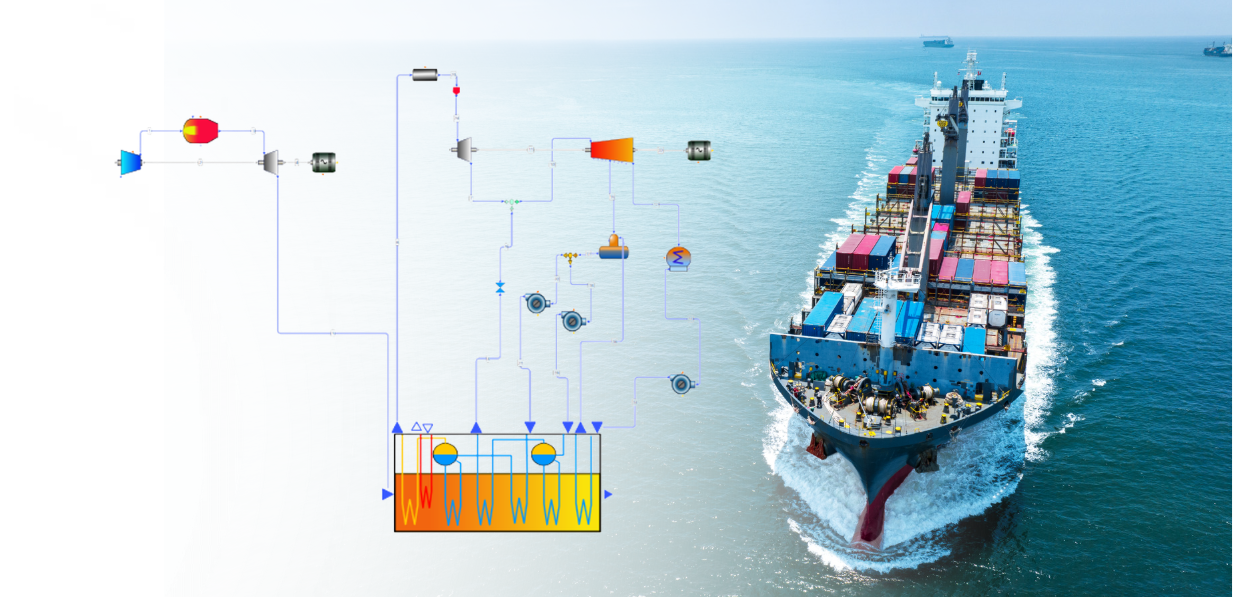
Large marine engines reject a substantial amount of energy through exhaust gas and cooling circuits. Waste-heat recovery can route that energy through an exhaust-gas economizer, steam turbine, power turbine or Organic Rankine Cycle to generate electricity or shaft assistance.
Reviews of marine waste-heat systems point to heat exchangers, Rankine-cycle equipment, thermoelectric generation and combined heat-and-power arrangements as practical pathways, although available space and compatibility with existing machinery remain decisive constraints [2]. Proven compound systems have also combined steam and exhaust-gas power turbines to increase onboard electrical generation [3].
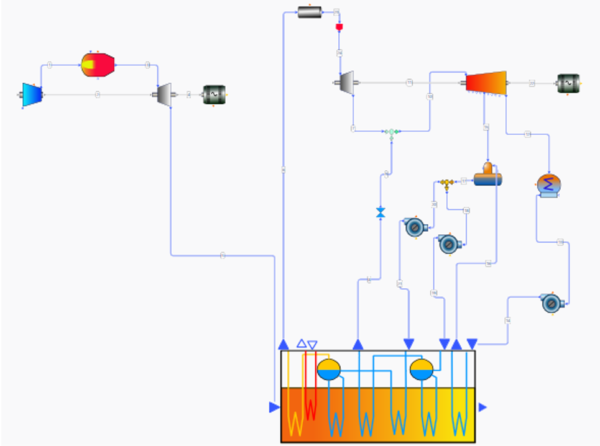
Figure 3. Waste Heat Recovery System Modeled in AxSTREAM System Simulation
However, a highly efficient turbocharger can raise exhaust backpressure or reduce waste heat available for recovery. These interactions illustrate why the four engineering levers cannot be optimized independently. The next lever explores how electrification changes the way that energy is distributed throughout the vessel.
Electrification: Changing the Architecture
In an integrated electric-propulsion system, prime movers drive generators, and electric motors turn the propeller. Batteries or fuel cells can then support peak loads, low-emission port operation and spinning reserve. Turbogenerators fed by recovered heat can join the same electrical bus. This arrangement decouples engine speed from propeller speed, giving operators more freedom to run each energy source efficiently.
![Interpretive diagram of the four interacting pathways inside a boat vessel: turbocharging, heat recovery, electrification and alternative fuels. SOURCE: [Generated with AI]](https://www.softinway.com/wp-content/uploads/2026/07/Screenshot-2026-07-27-112758-600x344.png)
Figure 4. Four interacting pathways: turbocharging, heat recovery, electrification and alternative fuels. SOURCE: [Generated with AI]
Alternative Fuels: Rewriting the Machine Specification
The fuel transition expands rather than eliminates the role of turbomachinery. Hydrogen may require cryogenic or high-pressure storage, controlled ventilation and specialized compressors. Ammonia introduces toxicity, material-compatibility and leak-detection requirements. Methanol is easier to store as a liquid, but renewable production and well-to-wake performance determine its climate value. DNV guidance treats LNG, biofuels, ammonia, methanol and hydrogen as distinct pathways with different fire, explosion, toxic-exposure, corrosion, cryogenic and bunkering considerations [4]. Recent technical reviews likewise emphasize that fuel readiness depends on upstream low-GHG production, port infrastructure and safe operation, not only on the engine installed aboard the ship [5].
For turbomachinery designers, the key questions include seal integrity, material resistance, lubrication compatibility, rotor dynamics, ignition-source control and performance across a wider range of gas properties. Fuel-flexible vessels may also need machines and controls that remain stable when fuel composition, ambient conditions and operating modes change. Designing for conversion or modular replacement can reduce the risk of locking a long-lived ship into one uncertain fuel pathway.
The Integration Challenge: Uniting the Four Levers
The most difficult work lies at the interfaces between these four levers. Successful projects, therefore, begin by grounding that work in the vessel’s real duty cycle. Engineers must model propulsion demand, hotel loads, weather, port time, fuel availability and degradation over the ship’s operating life. Digital twins, condition monitoring and model-based controls can keep compressors and turbines close to their intended maps while identifying fouling, erosion or seal deterioration before efficiency is lost. The best design is not the one with the most technology, but the one that delivers measurable lifecycle reductions, remains safe under abnormal conditions and can be maintained by the crew.
A Practical Route Forward
Near-term decarbonization will combine immediate efficiency measures with fuel-ready architecture. That means improving turbocharger matching, recovering useful exhaust energy, electrifying loads where the duty cycle supports it, and building safety and flexibility into alternative-fuel systems. As these elements converge, turbomachinery becomes more than engine-room hardware. It becomes the coordinating layer between thermal, mechanical and electrical energy, enabling ships to use less fuel today and adapt to lower-carbon energy tomorrow.
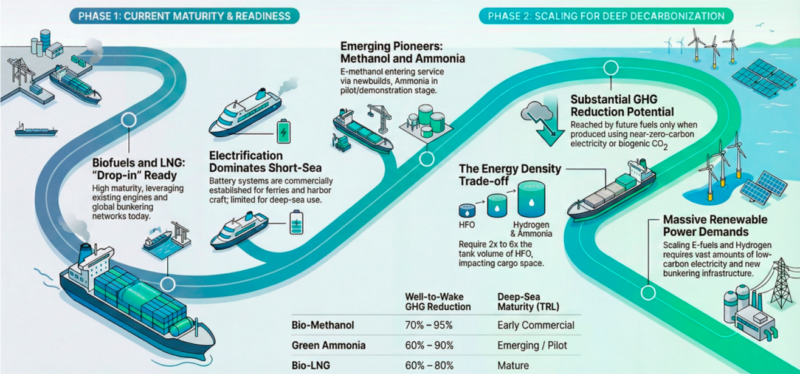
Figure 5: A two-phase maritime decarbonization roadmap. Phase one: near-term, ready-to-deploy options like biofuels, LNG/Bio-LNG, and electrification for short-sea and port use. Phase two: deeper decarbonization through e-methanol, hydrogen, and ammonia. Rather than naming one winning pathway, the figure compares how readiness, emissions reduction, fuel-volume tradeoffs, and infrastructure needs shift over time. SOURCE: [5]
Engineering the Complete Energy System with AxSTREAM Platform
The four decarbonization levers must not only perform effectively as individual technologies but also operate seamlessly as an integrated system. This interaction can be challenging to evaluate using siloed design and analysis tools. With AxSTREAM’s fully integrated modeling environment, engineers can design and optimize turbomachinery components such as compressors and turbines for turbochargers while simultaneously assessing their impact on the overall marine powertrain. By combining turbomachinery design with thermodynamic, thermal-fluid, waste heat recovery, electrical propulsion, and alternative-fuel system modeling, AxSTREAM enables a holistic analysis of the entire vessel energy system. This systems-level approach allows engineers to understand component interactions, identify trade-offs, and optimize overall efficiency, emissions reduction, and operational performance rather than improving individual subsystems in isolation.
In support of next-generation marine efficiency and decarbonization objectives, compressors, turbines for turbochargers, and other turbomachinery components can be designed, analyzed, and optimized using AxSTREAM for aerodynamic design, performance analysis, geometry optimization, rotor dynamics, and multidisciplinary engineering.
At the system level, AxSTREAM System Simulation enables engineers to model and analyze waste-heat recovery systems, organic Rankine cycles, steam turbine cycles, gas turbine cycles, combined cycles, and other thermodynamic and thermal-fluid systems. Its coupled 0D and 1D simulation capabilities support steady-state and transient analysis, cycle-architecture evaluation, parametric studies, and system-level optimization.
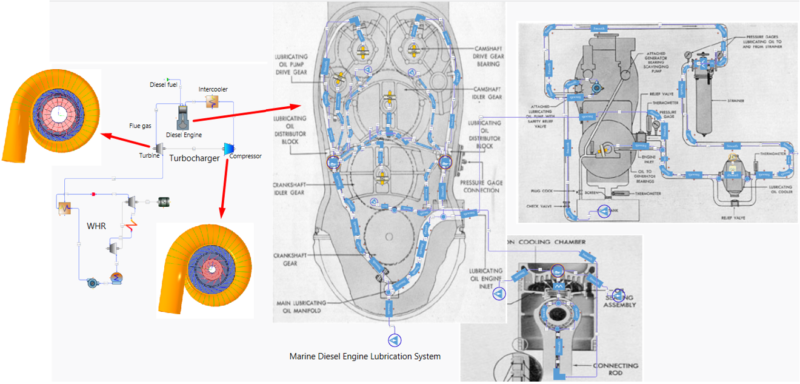
Figure 6. Holistic Modeling Approach in AxSTREAM Platform
SoftInWay’s holistic modeling approach integrates 0D, 1D, and 3D solvers to design and analyze turbomachinery, thermodynamic and thermal-fluid systems as a single, connected environment rather than as isolated components. This enables engineers to simulate sub-system interactions (interaction of turbomachines with thermodynamic cycle systems), such as aerodynamics, heat transfer, and rotor dynamics, simultaneously across the entire operating range. The holistic modelling approach is shown in Figure 6.
Charting the Course Ahead
Decarbonizing maritime shipping is not a matter of adopting a single technology, fuel, or machine. It requires a coordinated approach in which turbocharging, waste-heat recovery, electrification, and alternative fuels function as an integrated marine energy system. The greatest efficiency gains and emissions reductions will come not from optimizing these technologies independently, but from understanding and managing the complex interactions between them across the vessel’s entire operating profile. As the maritime industry advances toward increasingly ambitious sustainability targets, engineers must move beyond component-level design and embrace system-level optimization. Turbomachinery will play a central role in this transition, serving as the link between thermal, mechanical, and electrical energy systems while enabling greater efficiency, fuel flexibility, and operational performance.
By combining detailed turbomachinery design with thermodynamic, thermal-fluid, and power system simulation in a unified environment, AxSTREAM helps engineers evaluate these interactions early in the design process and develop practical, future-ready marine powertrains. Ultimately, the path to lower-carbon shipping will be defined not by individual technologies, but by how effectively they are integrated into a resilient, efficient, and adaptable energy system for the vessels of tomorrow.
To learn more about how AxSTREAM can support the design and optimization of marine turbomachinery, waste-heat recovery systems, alternative-fuel powertrains, and integrated energy systems, contact SoftInWay at info@softinway.com.
References
[1]International Maritime Organization. 2023 IMO Strategy on Reduction of GHG Emissions from Ships[2]Miller, T. et al. “Waste Heat Utilization in Marine Energy Systems for Enhanced Efficiency.” Energies 17, 5653 (2024)[3]Mitsubishi Heavy Industries. “Development of Super Waste-Heat Recovery System for Marine Diesel Engines.” Technical Review 48(1), 2011[4]DNV. “Introduction to Alternative Fuels: LNG, Biofuels, Ammonia, Methanol and Hydrogen[5]Costa, R. “Technological Bottlenecks in Fuels for Maritime Decarbonization.” Journal of Marine Science and Engineering 14, 570 (2026)[6]https://www.wartsila.com/marine/decarbonisation/solutions-for-newbuild-vessels."*" indicates required fields