May 15, 2026
Maneuver Loads in Rotor Dynamics: Bringing Aircraft Motion into Simulation
Aircraft rotor systems rarely operate under purely gravitational loading conditions. During flight, changes in orientation, velocity, and acceleration of the airplane introduce additional forces that alter how loads are transmitted through the shaft and into the bearings. These maneuver-induced effects can significantly influence the static equilibrium state of the system and are often overlooked in simplified analyses.
As modeling approaches become more advanced, engineers can now view maneuver conditions within static analysis, enabling a more realistic assessment of rotor-bearing behavior under maneuver conditions. In this blog, we will break down why maneuver loads matter, how different types of loads form, and how modern tools like AxSTREAM RotorDynamics can be used to perform accurate analyses that incorporate them into system behavior.

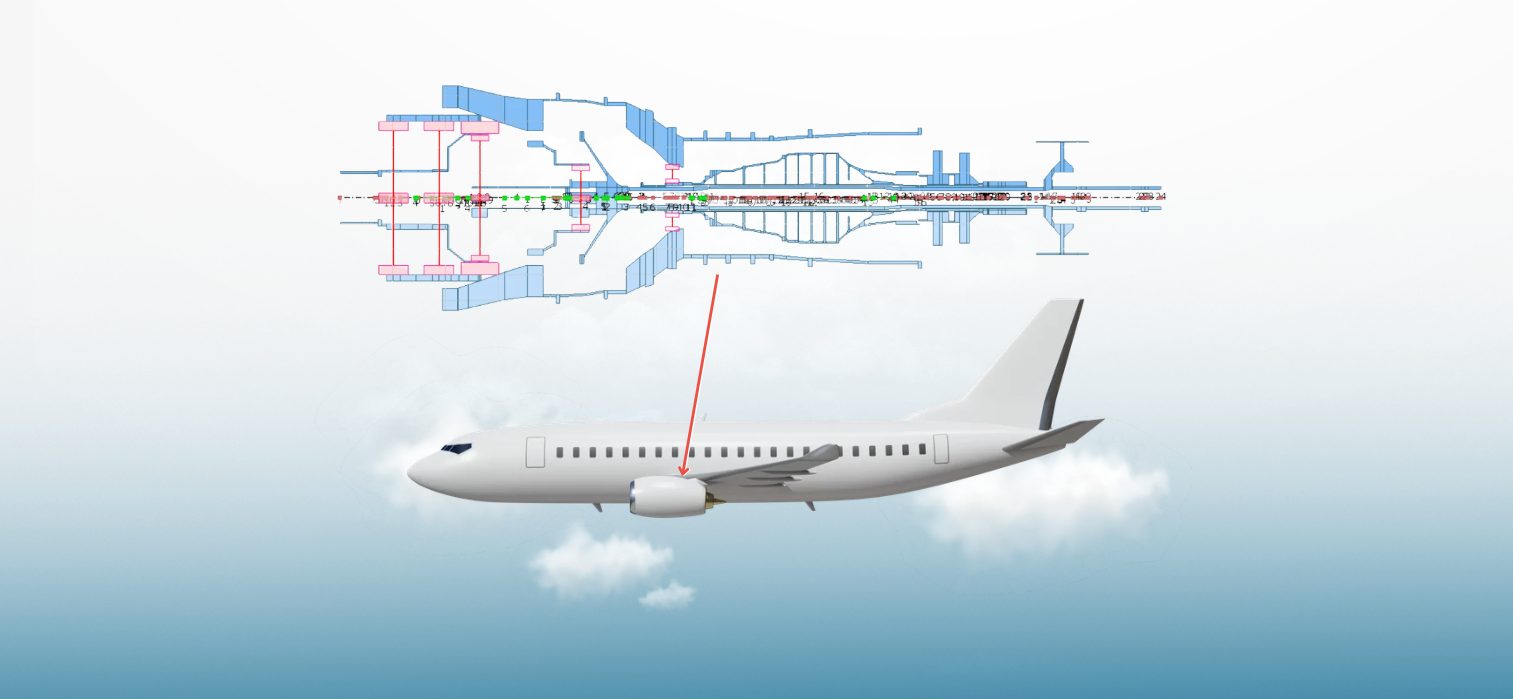
Figure 1. Aircraft in motion
How Maneuver Loads Form and Why They Matter for Analyses
Maneuver loads form primarily from the motion of the aircraft’s supporting structure carrying the rotor system. To capture an accurate equilibrium state and understand how the system behaves under actual flight conditions, engineers need to consider various components that contribute to the total loading environment.
Gravity is one component to consider, but analyses that focus on gravity alone may underestimate loads or miss critical operating conditions entirely. Neglecting these effects can result in an inaccurate estimation of bearing stress, which can accelerate fatigue, reduce bearing life, and ultimately increase the risk of premature or catastrophic bearing failure.

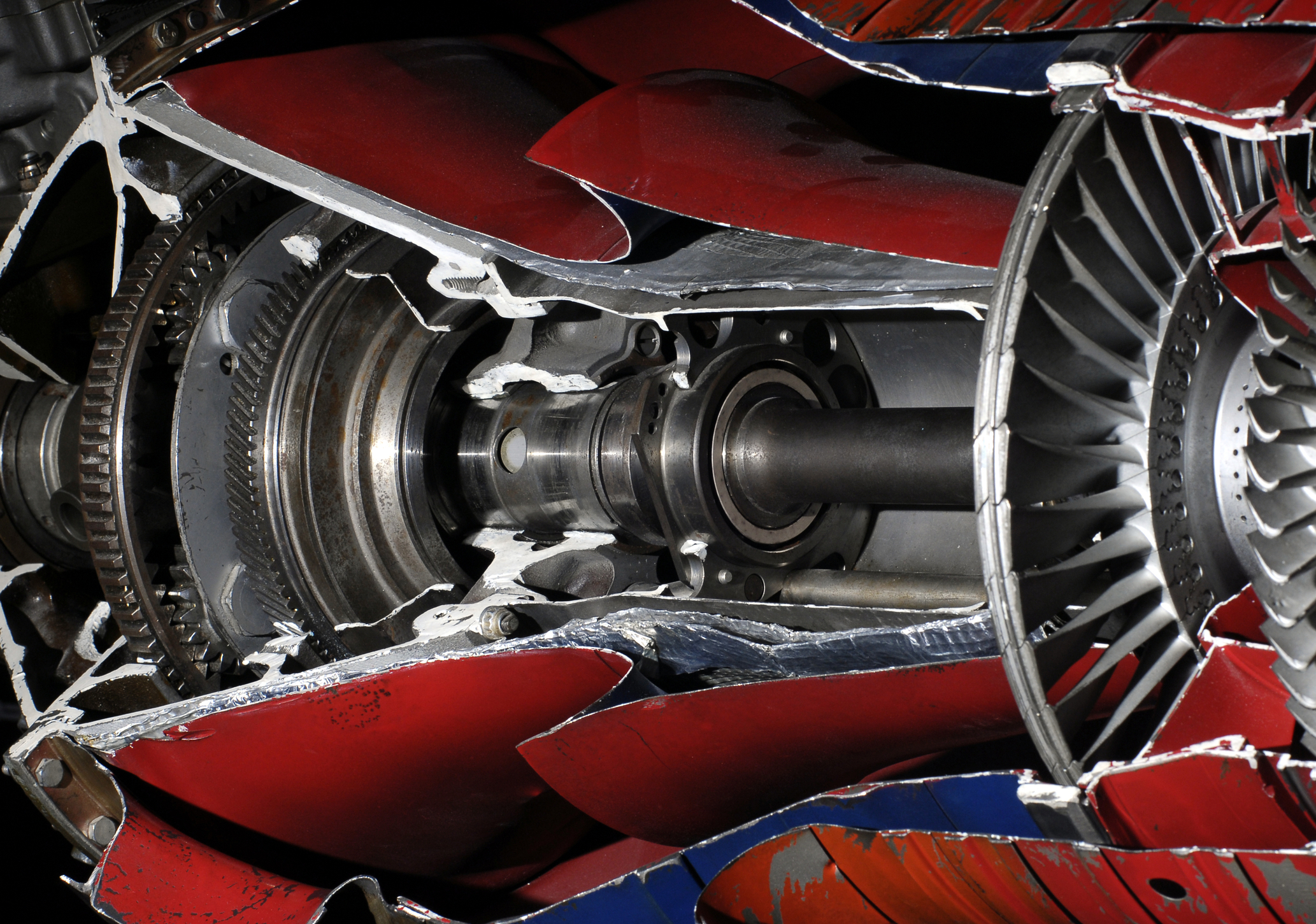
Figure 2. Example of a bearing failure
That’s why incorporating maneuver loads allows engineers to capture a more realistic equilibrium state and better understand how the system behaves under actual flight conditions. Considerations like aircraft rotations and accelerations that generate additional inertial forces and gyroscopic moments can act on the rotor system. Let’s take a look at some of these maneuver load sources in more detail.
Sources of Maneuver-Induced Rotor Loads
Aircraft Orientation and Gravity Projection
Aircraft attitude and orientation directly affect how gravity impacts the rotor system. As the aircraft pitches, rolls, or yaws, the direction of gravitational loading on the shaft changes.
This reorientation can alter bending moments and lead to different load paths through the system. Even when there are no other accelerations in play, changes in orientation alone can significantly influence bearing loads and shaft alignment.
Linear Acceleration Effects
Linear acceleration is a maneuver load which introduces additional forces acting on the rotor mass. These forces are proportional to the acceleration magnitude and act in the opposite direction of motion.
Depending on the maneuver, these loads can either amplify or counteract gravity, leading to increased or reduced bearing reactions. Rapid accelerations, like those during takeoff, evasive maneuvers, or turbulence, can create peak load conditions that are not captured by static analysis considering gravity alone.
Rotational Motion and Off-Axis Effects
Aircraft rotation introduces more complex phenomena. When the rotor is located away from the aircraft’s center of mass, rotational motion generates position-dependent forces, including centrifugal forces due to angular velocity and tangential forces from angular acceleration.
These forces grow with both rotational speed and distance from the center of mass, making off-axis placement particularly important. The combined effect is often increased shaft bending and asymmetric loading of bearings.
Gyroscopic Moment
The gyroscopic moment is a key phenomenon in rotor dynamics that occurs when a rotor is spinning while its supporting structure (or shaft axis) is also rotating. This results from the interaction between rotor angular momentum and applied angular velocity, producing a moment about a third axis orthogonal to both. Even though it may seem counterintuitive, it must be accounted for in any analysis.
Implications for Bearing Load Prediction
Accurate prediction of bearing loads requires capturing the full set of forces acting on the system. Maneuver-induced effects can introduce load cases that exceed those predicted under static gravitational assumptions. By accounting for aircraft motion, engineers can better:
- Identify worst-case loading scenarios
- Evaluate sensitivity to specific maneuvers
- Understand how off-axis configurations influence system behavior
- Detect potential sources of premature wear or failure
This leads to more reliable assessments of bearing life and overall system integrity.
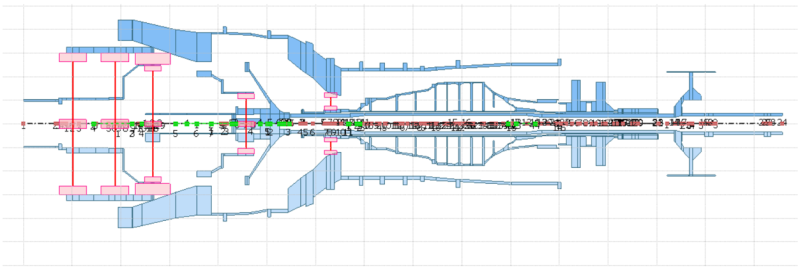
Figure 3. Example of an aircraft engine modelled in AxSTREAM RotorDynamics
AxSTREAM RotorDynamics Software Solutions
Modern software tools, such as AxSTREAM RotorDynamics, provide users with the capabilities for extending traditional gravity-based analysis by incorporating the effects of aircraft motion on rotor-bearing systems, including:
- Representation of aircraft orientation through gravity direction or Euler angles, enabling accurate projection of gravitational loads onto the rotor system;
- Inclusion of linear acceleration effects, allowing evaluation of additional inertial forces acting on the rotor during maneuvering conditions;
- Consideration of angular velocity and angular acceleration, capturing centrifugal and tangential load contributions;
- Definition of rotor position relative to the aircraft center of mass, enabling accurate assessment of off-axis effects on shaft deflection and bearing reactions;
- Direct specification of rotor speed to account for gyroscopic influences on load distribution.
By incorporating these effects within static analysis, engineers can better predict bearing loads, evaluate shaft deflections, and identify maneuver-induced mechanical risks. This leads to more reliable rotor–bearing designs and improved confidence in system performance under real operating conditions.
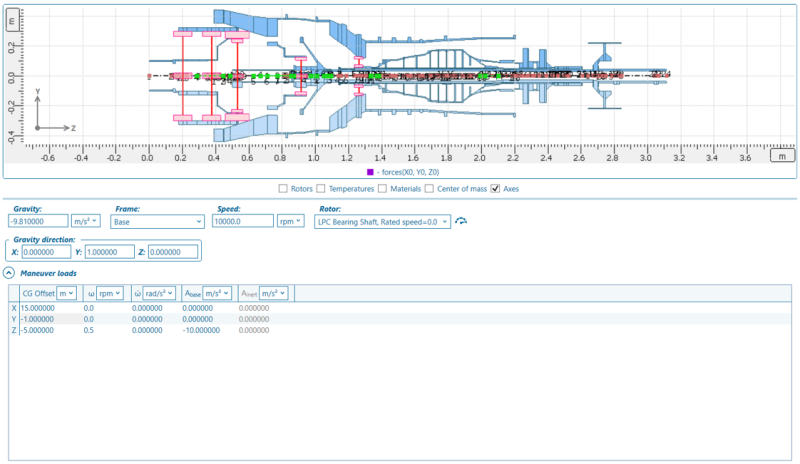
Figure 4. Specification of the maneuver loads in AxSTREAM RotorDynamics
Conclusion
Maneuver loads fundamentally reshape the loading environment of rotor systems in aircraft. Recognizing and accounting for effects like orientation, acceleration, and off-axis motion, is essential for accurate analysis, improved bearing load prediction, and identification of maneuver-induced mechanical risks. With the right modeling approaches, such as those introduced in AxSTREAM RotorDynamics, these complex phenomena can be incorporated into practical engineering workflows, leading to more robust and reliable rotor–bearing designs.
References
[1] Das, A. S., Dutt, J. K., & Ray, K. “Active Vibration Control of Flexible Rotors on Maneuvering Vehicles.” AIAA Journal, https://doi.org/10.2514/1.43378 [2] Chen, X., Gan, X., & Ren, G. “Effect of flight/structural parameters and operating conditions on dynamic behavior of a squeeze-film damped rotor system during diving–climbing maneuver.” Proceedings of the Institution of Mechanical Engineers, Part G: Journal of Aerospace Engineering, https://doi.org/10.1177/0954410020942610"*" indicates required fields