Feb 19, 2015
Gas Turbine Technology in Aircraft Propulsion
It is very interesting to take a look at how gas turbine technology has made its way into aircraft propulsion and improved over time. When the idea of a turbojet was introduced by Frank Whittle and others in the 1920s, no one could have guessed that it would change the future of air propulsion. The Committee on Gas Turbines from the National Academy of Sciences reported (1940): “In its present state … the gas turbine engine could hardly be considered a feasible application to airplanes mainly because of the difficulty in complying with stringent weight requirements imposed by aeronautics” [1]. This puts into perspective the immense advancement that gas turbine development has made to be an integrated part of aircraft propulsion today.
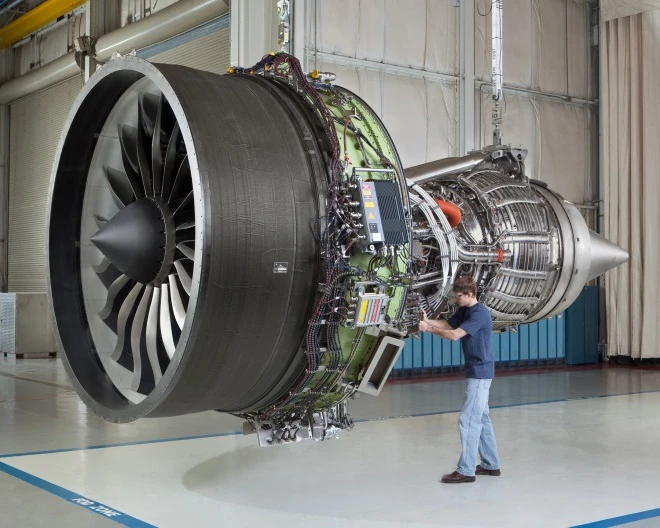
GEnx-1B engine (first run, 2006) for the Boeing 787 Dreamliner, from Airline Reporter [3].
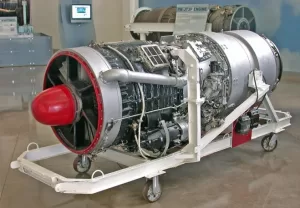
Rolls-Royce Avon Engine (first run, 1946), from Wikipedia [2].
A quick look at the engine characteristics reveals the great advancement in design and manufacturing of jet engines from the early turbojets to the most advanced turbofans today. For instance, General Electric’s J31, with an overall pressure ratio of 3.8:1 and maximum thrust of 1,650 lbf, was one of the first manufactured jet engines in the United States [2]. Nowadays, Rolls-Royce Trent 1000 has achieved a maximum thrust of 78,000 lbf with an overall pressure ratio of more than 50:1 [4]. Without a doubt, gas turbine technology has made a huge impact on aircraft propulsion and there will be more to come in future.
![Trent 1000 engine, from Rolls-Royce [4].](https://www.softinway.com/wp-content/uploads/2024/09/trent-1000-engine-300x181.jpg)
Trent 1000 engine, from Rolls-Royce [4].
"*" indicates required fields