Jan 26, 2026
AxSTREAM: A New Engineer’s Experience
When I first opened AxSTREAM FlowPath, I had no idea what I was doing. The “No solutions found” pop-up appeared more often than I care to admit, and frustration followed quickly. Seven months later, I’ve gone from fumbling through error messages to confidently designing turbomachinery as a Junior Turbomachinery Engineer.
This isn’t a story about becoming an expert overnight. It’s a story about how the right combination of tutorials, practical tools, and strong team support can make the AxSTREAM learning process far more approachable than you might expect.
Getting Started with AxSTREAM: Help from Peter and Tutorials
Though it felt extremely daunting at first, learning to use AxSTREAM turned out to be far less intimidating than I expected. Within a relatively short time, I was able to use it confidently and create turbine designs that I was genuinely proud of.

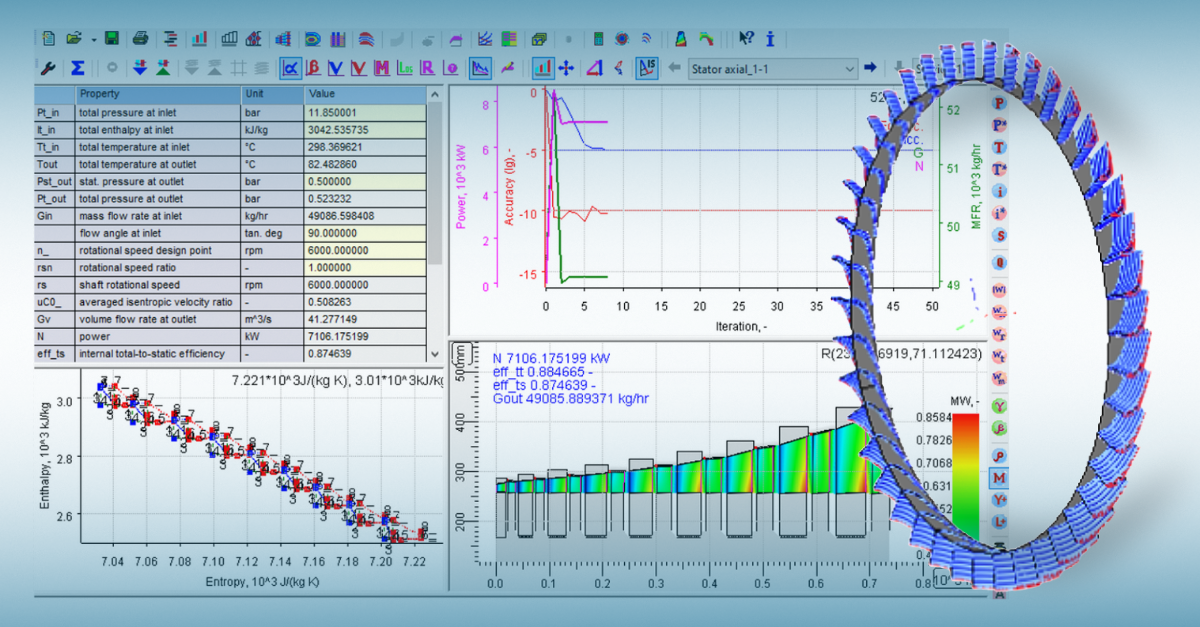
Fig. 1. Preliminary design generation using AxSTREAM Flowpath’s inverse solver
My first experience with AxSTREAM FlowPath was in preparation for my technical interview for my current position at SoftInWay. I had never used the software, or any similar software, so I was incredibly anxious about how steep the learning curve might be and was pleasantly surprised when I was able to get up to speed as quickly as I did.
The SoftInWay wiki offered a wide range of tutorials covering AxSTREAM FlowPath and other products. At the time, I was honestly too intimidated to explore all of them, but I relied heavily on Peter, SoftInWay’s AI Workmate, who helped me connect turbomachinery concepts with the practical steps needed to navigate the software.
For several days, I worked in coffee shops and libraries from open to close, referring back to the tutorials and restarting my project a handful of times. I got frustrated frequently, but persistence paid off and I learned how to set up the project properly and began generating meaningful results. Getting to that point was both a relief and a confidence boost.
In the week leading up to my technical interview, I focused on refining, optimizing, and analyzing my design. While I still leaned on Peter and the tutorials, by the time my interview rolled around, I had made a strong turbine design that I felt confident in. That confidence was clearly not misplaced, as the next day I received an offer for the position.

Fig. 2. Calculation results generated from AxSTREAM FlowPath
Turning AxSTREAM Tutorials into Real Results for Clients
When I joined SoftInWay, my very first task was to complete several SoftInWay Turbomachinery University (STU) courses and finish any remaining tutorials from my technical interview prep. Almost immediately after, I was brought onto a high-priority client project where I needed to use AxSTREAM FlowPath and AxSTREAM ION to design several axial turbines
My first month felt like a true “trial by fire”, as one of my colleagues put it. As I worked, I found myself switching between FlowPath and the SoftInWay wiki frequently, trying to fill in any knowledge gaps on the fly. Despite my growing confidence and skills with the software, I still ran into roadblocks that required me to restart my project entirely. Only now, the pressure was even higher. During my technical interview project, the only person facing consequences would be me, but now, I had people relying on me to design and deliver something useful.
Fortunately, my teammates knew firsthand what it felt like to step into their first engineering job fresh out of college and understood how overwhelming it could be. Their support and guidance helped me as I worked through the project. This didn’t mean the mistakes stopped, I still made them, like when I ran a simulation over the weekend only to find out Monday morning that I had used the wrong boundary conditions, but each misstep became a learning opportunity. When we wrapped the project up, I felt genuinely proud of the work that I had done.

Fig. 3. Stator blade profiling in AxSTREAM FlowPath’s Profiler and Blade Design module
Working with AxSTREAM Today
Today, I’ve been working at SoftInWay as a Junior Turbomachinery Engineer for almost seven months, and while I have a much stronger grasp of AxSTREAM FlowPath and the other tools in the AxSTREAM suite, I still go back to the wiki for help or ask the other engineers for advice. The tutorials provide an excellent foundation, especially since the example projects are rooted in real-world engineering problems. Over time, with practice and a bit of learning on the go, I’ve found myself relying on the tutorials less and less.
I’ve now worked on several projects using AxSTREAM FlowPath, and with every new project, I’m able to implement something I’ve learned from the previous project. Although learning any new skill can be nerve-wracking at first, having access to so many resources made it possible for me to not only gain my footing with the software, but also the knowledge needed to use it effectively.

Fig. 4. Blade profiling using AxSTREAM FlowPath
Looking Back and Looking Ahead: Seven Months of AxSTREAM Experience
While I still rely on my colleagues for help from time to time, I’ve come to appreciate just how important access to experienced engineers has been to my growth. When I run into an issue or feel unsure about a modeling decision, I can ask someone who has worked through similar problems before and get practical guidance that helps me move forward.
What stands out to me now is how similar my experience getting help internally is to what AxSTREAM users receive through SoftInWay’s technical support. Our customers are supported by engineers who work with these tools every day and are directly involved in developing them, so they have a deep understanding of both the software itself and the engineering problems it is meant to solve. The questions I bring to my teammates internally are very similar to the questions our customers bring to tech support, and they are answered with the same kind of practical, experience-based guidance.
Seven months ago, I was entirely new to turbomachinery design. Today, I’m contributing to real client projects using AxSTREAM FlowPath and other tools in the AxSTREAM suite. That progress was shaped not only by tutorials and practice, but also by having reliable access to people who could help me work through problems when I got stuck. That same combination of learning resources and expert guidance is available to AxSTREAM users as they build their own experience with the software.
Takeaways and Guidance for New AxSTREAM Users
If you’re a new AxSTREAM user feeling intimidated or unsure of where to start, this is my advice: lean into the resources around you. Don’t hesitate to use Peter AI, SoftInWay’s Wiki, and our technical support team for help. Like any technical skill, AxSTREAM takes time, practice, and patience before it starts to feel like second nature, but you will get there, often faster than you might expect. These resources that SoftInWay provides have been intentionally designed to guide new AxSTREAM users and early-career engineers to build confidence and get up to speed on the industry’s top tools, efficiently.
"*" indicates required fields